Maximizing Profits with Forex Arbitrage: Expert Strategies Revealed
Harness forex arbitrage to boost profits. Learn strategies to exploit price discrepancies. Advanced insights for traders.

Can you imagine making profits by simply spotting price discrepancies across different forex markets? This opportunity exists, and it's called forex arbitrage. In this comprehensive guide, we delve into the intricacies of leveraging forex arbitrage to maximize your trading profits.
TL;DR
- Forex arbitrage involves exploiting price differences across markets.
- Requires fast execution and access to multiple trading platforms.
- Not risk-free; market volatility and execution delays can impact trades.
- Essential to use robust risk management strategies.
- Great for traders with strong analytical and technical skills.
Understanding Forex Arbitrage: The Basics
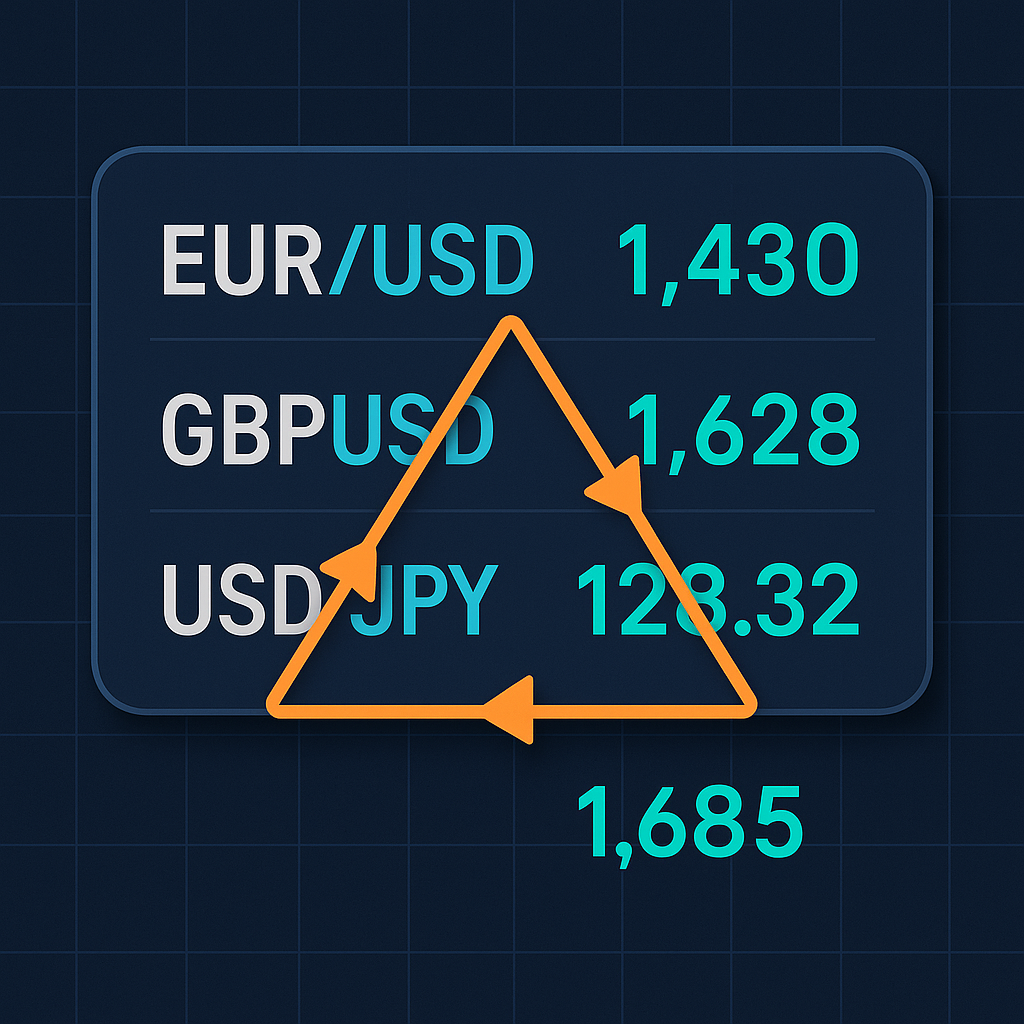
Forex arbitrage is a trading strategy that exploits pricing inefficiencies in the foreign exchange market. The core principle is simple: buy low in one market and sell high in another. But while the concept is straightforward, execution can be complex.
Consider the current market scenario: EUR/USD is trading at 1.0420, and this rate might slightly differ on another platform. Small discrepancies like these, often due to differing liquidity or technical delays, create arbitrage opportunities. However, seizing these opportunities requires swift action and a keen eye for market movements.
Types of Forex Arbitrage
Simple Arbitrage
This is the most basic form, where a trader buys a currency pair on one platform and sells it on another at a higher price. For instance, if EUR/USD is 1.0420 on one platform and 1.0425 on another, a trader can exploit this difference by buying on the cheaper platform and selling on the more expensive one.
Triangular Arbitrage
Triangular arbitrage involves three currencies and takes advantage of the differences in cross-currency exchange rates. For example, using the pairs EUR/USD, USD/JPY, and EUR/JPY, a trader can potentially profit from discrepancies among these rates. This type of arbitrage requires sophisticated calculations and quick execution.
Identifying Arbitrage Opportunities

Finding arbitrage opportunities involves constant monitoring of the forex markets and the ability to quickly identify discrepancies. Traders often rely on advanced software and algorithms to detect these fleeting opportunities. However, understanding the underlying market fundamentals is equally critical.
Consider the example of GBP/USD trading at 1.2520 and USD/JPY at 157.50. An arbitrageur might look at the cross-rate between GBP/JPY and compare it with the individual rates to identify potential profits.
Executing Forex Arbitrage Trades
Execution is where the rubber meets the road in forex arbitrage. A trader needs access to fast execution platforms and multiple broker accounts. Execution speed is crucial, as delays can erase potential profits.
| Arbitrage Type | Execution Complexity | Tools Needed |
|---|---|---|
| Simple Arbitrage | Low | Basic trading platform |
| Triangular Arbitrage | High | Advanced algorithms |
Technical Tools for Forex Arbitrage
Having the right tools at your disposal can make or break an arbitrage strategy. Professional traders use high-frequency trading systems, latency arbitrage platforms, and broker-provided APIs to streamline their operations. These tools help execute trades faster and more efficiently than manual methods.
For instance, if you are trading Gold (XAUUSD), which is highly volatile at $2660.00, having a robust system that can execute trades within milliseconds is vital.
Challenges in Forex Arbitrage
Despite its appeal, forex arbitrage is not without challenges. Market volatility, slippage, and execution delays can all impact the effectiveness of an arbitrage strategy. Moreover, brokers are increasingly aware of arbitrage traders and may implement measures to prevent such trades.
Overcoming Challenges
To mitigate these issues, traders should focus on using reliable brokers with transparent pricing and execution policies. It's also crucial to stay updated on market trends and economic data that might affect exchange rates, such as the Dollar Index (DXY) currently at 108.50.
Risk Management in Forex Arbitrage
No trading strategy is complete without a solid risk management plan. In arbitrage, the risks stem from execution delays and market volatility. Traders should set strict stop-loss orders and maintain a balanced portfolio to manage these risks effectively.
For more comprehensive risk management strategies, consider exploring our Forex Risk Management Guide.
Step-by-Step Guide to Implementing Forex Arbitrage
- Identify the currency pairs you will focus on, such as EUR/USD, GBP/USD, and USD/JPY.
- Set up accounts with multiple brokers to access different market prices.
- Use software to monitor price discrepancies in real-time.
- Execute trades quickly to capitalize on identified arbitrage opportunities.
- Utilize risk management strategies to protect against potential losses.
Common Mistakes and How to Avoid Them
Arbitrage trading requires precision and experience. Some common mistakes include failing to account for transaction costs, using unreliable platforms, and neglecting risk management. Avoid these pitfalls by ensuring you have a solid understanding of the markets and using reputable brokers.
Advanced Arbitrage Techniques
For seasoned traders, advanced arbitrage techniques such as statistical arbitrage and latency arbitrage offer additional avenues for profit. These strategies involve more complex calculations and require even faster execution speeds.
FAQ
Q: Is forex arbitrage risk-free?
A: No, while it aims to exploit price discrepancies, it comes with risks such as execution delays and market volatility.
Q: Can beginners engage in forex arbitrage?
A: It's best suited for experienced traders due to the complexity and speed required.
Q: What tools are essential for forex arbitrage?
A: High-frequency trading platforms, latency arbitrage software, and multiple broker accounts are crucial.
Q: How can I start learning about forex arbitrage?
A: Begin with educational resources and demo trading accounts to understand the mechanics without financial risk.
Risk Disclaimer: Trading in the forex market involves substantial risk and is not suitable for every investor. The high degree of leverage can work against you as well as for you. Before deciding to trade foreign exchange, carefully consider your investment objectives, level of experience, and risk appetite. Remember that past performance is not indicative of future results.