Forex Scalping: Mastering Quick Trades for Rapid Profits
Explore forex scalping strategies for quick profits. Master techniques and boost your trading success.

Forex Scalping: Mastering Quick Trades for Rapid Profits
Picture this: You’re sipping your morning coffee, and within minutes, you've made a profitable trade. This isn't a dream; it's the reality of forex scalping. If you've ever wondered how traders leverage small price movements for quick gains, you're in the right place. In this comprehensive guide, we’ll explore the intricacies of forex scalping and how you can master this strategy to boost your trading success.
TL;DR - Key Takeaways
- Forex scalping involves rapid trades to exploit small price changes.
- Best pairs for scalping include EUR/USD and GBP/USD due to high liquidity.
- Effective scalping requires precise timing and robust risk management.
- Technical indicators like moving averages and Bollinger Bands can enhance strategy.
- Traders should prepare for intense focus and quick decision-making.
What is Forex Scalping?
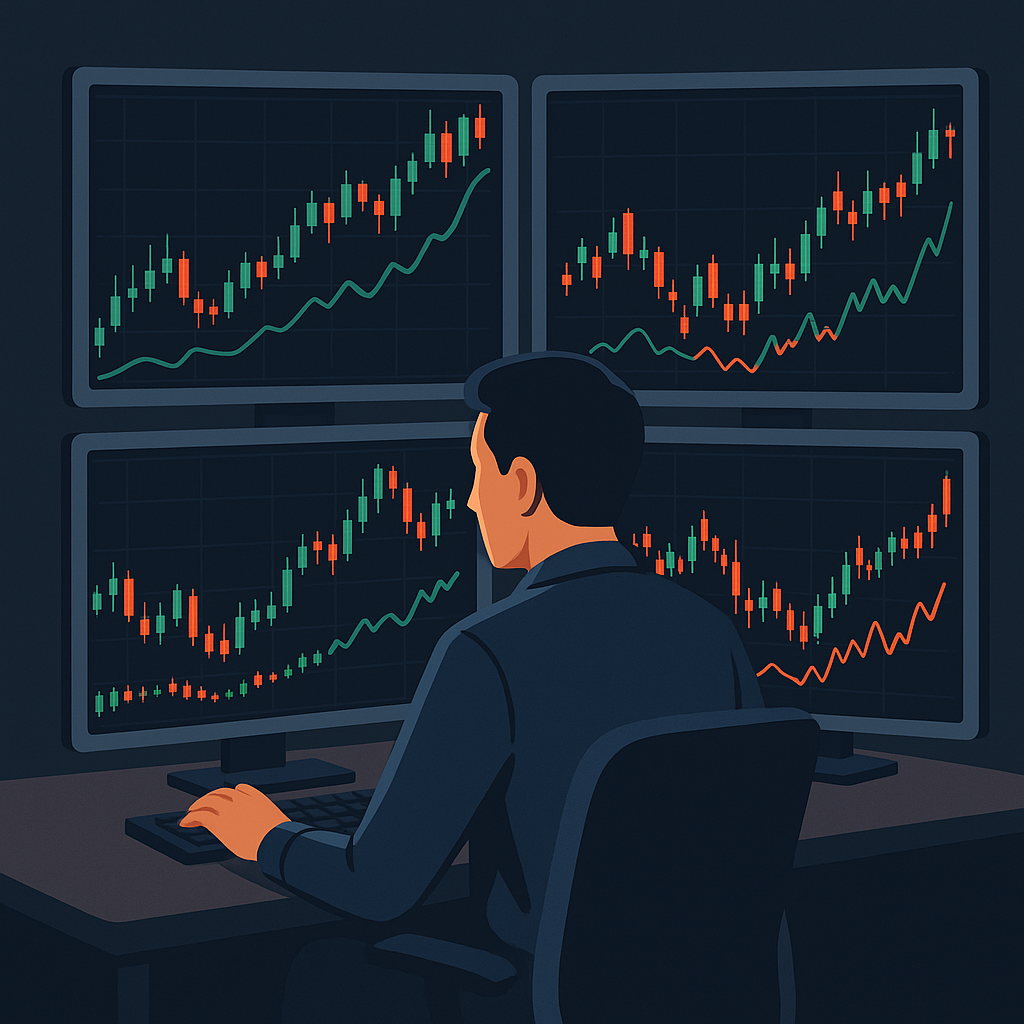
Forex scalping is a trading strategy that focuses on making a large number of small profits by executing trades within very short timeframes. Scalpers aim to capture small price movements and generally hold positions for a few seconds to minutes. This approach contrasts with day trading, where trades are held longer, and swing trading, which involves holding positions for days or weeks.
Why Scalping Works
Scalping works because currency pairs often experience minor price fluctuations even in stable markets. By capitalizing on these small changes, scalpers can accumulate significant profits over time. This strategy is particularly effective in volatile markets or during high liquidity periods when price movements are more pronounced.
Best Currency Pairs for Scalping
Choosing the right currency pairs is crucial for successful scalping. Ideally, traders should focus on pairs with high liquidity and low spreads. Here’s a comparison table of popular pairs for scalping:
| Currency Pair | Liquidity | Spread |
|---|---|---|
| EUR/USD | High | Low |
| GBP/USD | High | Low |
| USD/JPY | High | Medium |
For example, with the EUR/USD currently at 1.0420, a scalper might aim for a 5-10 pip profit, setting a stop loss 20 pips away to mitigate risk. This ensures a balanced risk-reward ratio while capitalizing on micro-movements.
Scalping Strategy Essentials
To excel in scalping, traders must develop a precise and disciplined approach. Here are some key components:
Technical Indicators
Technical analysis plays a pivotal role in scalping. Indicators such as Moving Averages, Bollinger Bands, and the RSI (Relative Strength Index) help traders identify entry and exit points. For instance, a crossover of fast and slow moving averages can signal a potential entry point.
Timing and Execution
Executing trades at the right moment is crucial. Scalpers often trade during peak market hours, such as the overlap of the London and New York sessions, when liquidity is highest. This ensures trades are executed swiftly with minimal slippage.
- Use limit orders to lock in desired entry and exit points.
- Monitor economic calendars for news events that could cause volatility.
Risk Management for Scalping
Risk management is the backbone of any successful trading strategy. In scalping, where trades are frequent, effective risk management is even more critical.
Setting Stop Losses and Take Profits
Stop losses should be set tightly, typically 20-30 pips from the entry point, to prevent significant losses. Conversely, take profit levels can be set at a 1:2 or 1:3 risk-reward ratio. For instance, if risking 20 pips, aim for a 40-60 pip gain.
Implementing these strategies not only protects capital but also ensures consistent profitability over time.
Executing the Perfect Scalping Trade
Executing a successful scalping trade involves a sequence of steps that must be followed precisely:
- Analyze the Market: Begin with a quick market analysis using technical indicators.
- Identify Entry Point: Use moving averages or candlestick patterns to pinpoint potential entries.
- Set Stop Loss and Take Profit: Predetermine these levels to manage risk effectively.
- Execute Trade: Enter the trade using limit or market orders to ensure swift execution.
- Monitor and Adjust: Continuously monitor the trade, adjusting stop losses as the market moves in your favor.
Trading Psychology: Staying Sharp in Scalping
Scalping requires mental agility and the ability to make quick decisions under pressure. Here’s how traders can maintain focus:
- Stay Disciplined: Stick to your strategy and avoid impulsive decisions.
- Take Breaks: Regular breaks can prevent fatigue, keeping your mind sharp.
- Review Trades: Analyze past trades to identify areas for improvement.
Advanced Scalping Techniques
Seasoned scalpers often employ advanced techniques to gain an edge. Some of these include:
Using Multiple Time Frame Analysis
By analyzing multiple time frames, traders gain a broader perspective of market trends while focusing on shorter-term movements for entry and exit. This approach helps in confirming trade setups.
Algorithmic Trading for Scalping
Some traders use automated algorithms to execute trades at lightning speed, capitalizing on minuscule price discrepancies that manual trading might miss.
FAQs About Forex Scalping
- Is forex scalping suitable for beginners?
While scalping can be profitable, it requires a deep understanding of the market and quick decision-making skills. Beginners are advised to start with demo accounts to practice. - What are the best times to scalp?
The best times are during high liquidity periods, such as the overlap of major market sessions. - How much capital is needed for scalping?
A larger capital base allows for greater flexibility and risk management, but even small accounts can be scalped effectively with proper discipline. - Can I scalp with any broker?
Not all brokers support scalping. Choose a broker that offers tight spreads and fast execution.
Risk Disclaimer: Trading forex involves significant risk, and it's important to understand that past performance does not guarantee future results. Always trade with money you can afford to lose, and consider using a demo account to practice.