Mastering Fundamental Analysis in Forex: A Trader's Guide
Explore how fundamental analysis can enhance your forex trading, focusing on economic indicators and news strategies.

Have you ever wondered how global events impact the currency markets? Understanding these dynamics is crucial for any serious forex trader. Fundamental analysis offers a lens through which traders can interpret the intricate web of economic indicators, central bank policies, and news events that drive currency valuations.
TL;DR
- Fundamental analysis examines economic indicators and news events to forecast currency movements.
- Central banks play a significant role in currency valuation through interest rate policies.
- Key economic indicators include GDP, CPI, employment data, and trade balances.
- Forex news trading capitalizes on market reactions to scheduled and unscheduled news releases.
- Using an economic calendar helps traders stay informed about high-impact events.
Understanding Fundamental Analysis in Forex

Fundamental analysis in forex involves evaluating the intrinsic value of a currency based on economic indicators, geopolitical events, and central bank actions. By assessing these elements, traders can predict future currency movements and make informed trading decisions.
Unlike technical analysis, which focuses on historical price movements and patterns, fundamental analysis looks at the economic factors that influence a currency's strength. This approach is essential for identifying long-term trends and opportunities in the forex market.
Key Economic Indicators
1. Gross Domestic Product (GDP): GDP measures the total economic output of a country. A growing GDP signifies a healthy economy, potentially strengthening the country's currency.
2. Consumer Price Index (CPI): The CPI tracks changes in the price level of a basket of consumer goods and services. High inflation, indicated by rising CPI, may lead a central bank to increase interest rates, affecting currency value.
3. Employment Data: Employment reports, such as non-farm payrolls in the U.S., provide insights into labor market health. Strong employment figures often boost a currency, as they suggest economic growth.
4. Trade Balance: The trade balance shows the difference between a country's exports and imports. A positive trade balance generally supports a stronger currency.
The Role of Central Banks
Central banks are pivotal players in the forex market, influencing currency values through monetary policy. By adjusting interest rates and implementing quantitative easing, central banks can control inflation and stabilize their economies, impacting exchange rates.
For example, the Federal Reserve's decisions on interest rates directly affect the USD's strength. A rate hike typically increases demand for the dollar, as higher interest rates offer better returns on investments denominated in USD.
Forex News Trading Strategies
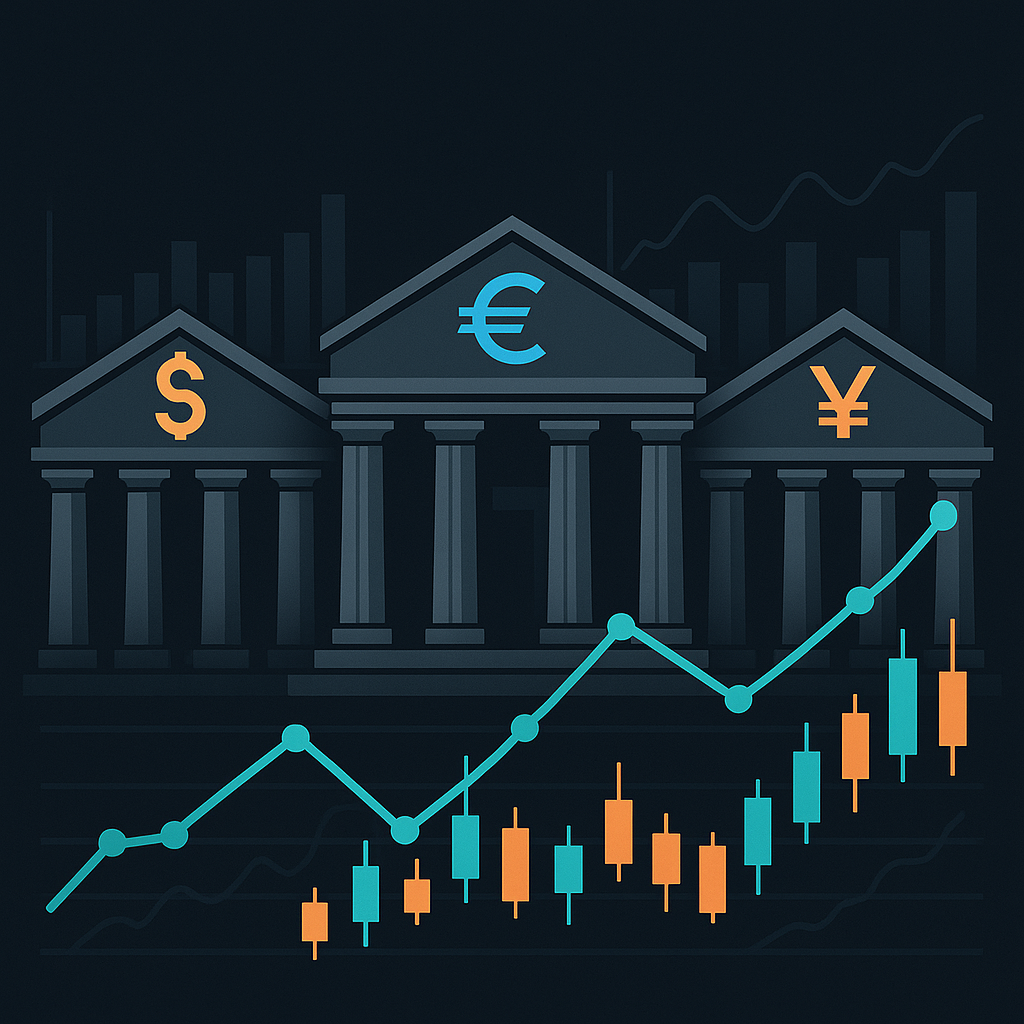
Forex news trading involves capitalizing on the market's reaction to news events and economic data releases. Traders often use an economic calendar to track upcoming announcements and plan their trades accordingly.
High-impact news events, such as central bank meetings, employment reports, and geopolitical developments, can cause significant market volatility. Successful news traders anticipate these movements and execute trades to benefit from the ensuing price swings.
| Indicator | Impact on Currency |
|---|---|
| Interest Rate Decision | Higher rates typically strengthen the currency |
| GDP Growth | Positive growth supports currency strength |
| Inflation Rate | High inflation may weaken the currency |
Using an Economic Calendar
An economic calendar is an essential tool for forex traders, providing a schedule of upcoming economic data releases and events. By reviewing the calendar, traders can prepare for high-impact news that may influence the markets.
For instance, a trader might anticipate volatility in the EUR/USD pair if a major ECB announcement is scheduled. By positioning themselves ahead of the news, they can capitalize on potential price movements.
Step-by-Step: Analyzing the Economic Calendar
- Identify high-impact events: Focus on events marked as high impact, such as central bank meetings and employment data releases.
- Analyze previous data: Review past data and forecasts to gauge potential market reactions.
- Plan your trades: Develop a strategy based on the expected market impact, setting entry and exit points accordingly.
Real-World Scenarios: Applying Fundamental Analysis
Consider the current market scenario where the EUR/USD is trading at 1.0420. Suppose the European Central Bank signals a potential interest rate hike due to rising inflation. Traders might anticipate a strengthening of the euro, adjusting their positions accordingly.
Similarly, if the U.S. releases a stronger-than-expected employment report, it could boost the USD against the JPY, currently at 157.50. Astute traders would look to position themselves to benefit from these shifts.
Integrating Fundamental and Technical Analysis
While fundamental analysis provides the 'why' behind market movements, technical analysis offers the 'how' and 'when.' Combining these approaches allows traders to make well-rounded decisions, interpreting data while monitoring price patterns and trends.
For example, a trader might use technical analysis to identify support and resistance levels in the GBP/USD, currently at 1.2520, while fundamental analysis provides context for potential breaches based on economic news.
FAQ
Q: What is the most important economic indicator for forex traders?
A: There isn't a single most important indicator, but interest rate decisions and employment data are crucial for assessing currency strength.
Q: How can I stay updated on forex news?
A: Use an economic calendar and follow reliable forex news sources. Consider subscribing to professional forex signals for timely updates.
Q: Can fundamental analysis be used for short-term trading?
A: Yes, especially in news trading where traders capitalize on short-term market reactions to economic data releases.
Q: Do central banks always influence currency markets?
A: Central banks have significant influence, but other factors like geopolitical events and market sentiment also play a role.
Risk Disclaimer
Forex trading involves significant risk and may not be suitable for all investors. It is important to carefully consider your financial situation and risk tolerance. Past performance does not guarantee future results. We recommend practicing with a demo account before trading with real money.